
CMMC Configuration Management: Baselines and Change Control an Assessor Can Test
CMMC configuration management asks one thing: do your systems match what your papers say? If you handle CUI, you need a written baseline, a change log and proof that both stay current.
CMMC Ready Now, in Leesburg, Virginia, provides CMMC compliance consulting for defense contractors: gap assessments, remediation and C3PAO preparation.
In This Article
This matters now. Under the DFARS CMMC rule, many DoD contracts have required a Level 1 or Level 2 self-assessment since November 10, 2025. DoD can also require a C3PAO assessment on some awards. When you affirm a Level 2 score, you are saying these controls work today.
The next rollout phase is on hold. No start date is settled, so do not wait on it to act.
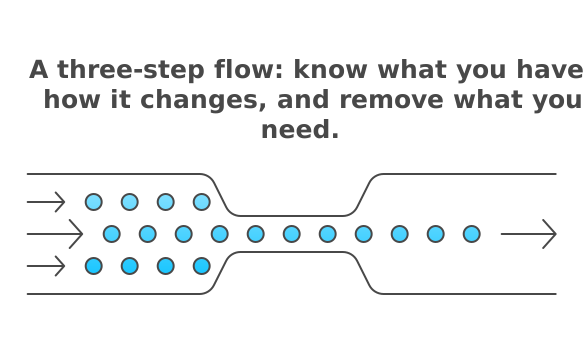
What does CMMC configuration management require?
The Configuration Management (CM) family has nine Level 2 requirements. They come from NIST SP 800-171 Rev 2, section 3.4. Level 1 has no CM requirements.
- CM.L2-3.4.1: Keep baselines and inventories of hardware, software, firmware and documentation.
- CM.L2-3.4.2: Set and enforce security configuration settings.
- CM.L2-3.4.3: Track, review, approve or deny, and log changes.
- CM.L2-3.4.4: Check the security impact of a change before you make it.
- CM.L2-3.4.5: Limit who can make changes, both physically and logically.
- CM.L2-3.4.6: Set up systems to provide only essential functions.
- CM.L2-3.4.7: Restrict or disable nonessential programs, ports, protocols and services.
- CM.L2-3.4.8: Use an allow list or a block list for software.
- CM.L2-3.4.9: Control and monitor software that users install.
Think of them as three jobs. Know what you have. Control how it changes. Remove what you do not need.
What is a baseline, and how will an assessor test it?
A baseline is the approved, written setup for a system. It says what should be installed and how it should be set.
CM.L2-3.4.1 has two parts: a baseline and an inventory. Both must cover hardware, software, firmware and documentation.
Both must also be kept current. A baseline written once and never touched does not meet the requirement.
CM.L2-3.4.2 adds the security settings. These are values like password rules, screen locks and disabled services. You must write them down and enforce them.
NIST SP 800-171A lists three assessment methods: examine, interview and test. An assessor may read your baseline, ask your admin about it, then check a live machine. If the machine does not match, the paper will not carry you.
Evidence that tends to hold up:
- A dated baseline for each type of system in scope.
- An inventory that matches what is really on your network.
- A settings report showing machines meet the baseline.
- A record of when the baseline was last reviewed.
How do I set up change control an assessor will accept?
CM.L2-3.4.3 has four parts an assessor looks for. Each change is tracked, reviewed, approved or denied, and logged.
A simple ticket or form can do this. What matters is that every change leaves a record.
CM.L2-3.4.4 adds a step before approval. Someone must ask how the change affects security. A short note in the ticket can show it happened.
CM.L2-3.4.5 limits who can make changes. You must define, document, approve and enforce those limits. That covers locked server rooms and admin rights alike.
Try this test on yourself. Pick one change from last month. Can you show who asked, who checked the risk, who approved it and when it was done?
If you cannot, an assessor will likely find the same gap.
How do I lock down software and services?
CM.L2-3.4.6 and CM.L2-3.4.7 work as a pair. First, decide what each system truly needs. Then turn off the rest.
That includes unused ports, protocols, services and programs. Keep a list of what you allow and why.
CM.L2-3.4.8 makes you choose a software policy. A block list denies known bad software. An allow list lets only approved software run.
NIST accepts either one. You must state which you use, list the software it covers and show it is enforced.
CM.L2-3.4.9 covers software users install on their own. You need a policy, a control on installs and a way to watch for them.
Why fix CM gaps before my next self-assessment?
The scoring weight is high. The DoD Assessment Methodology gives six CM requirements 5 points each: CM.L2-3.4.1, 3.4.2, 3.4.5, 3.4.6, 3.4.7 and 3.4.8. The other three are worth 1 point.
Under 32 CFR 170.21, a requirement worth more than 1 point cannot go on a POA&M. The one exception is SC.L2-3.13.11, which sits outside this family.
So most CM gaps must be closed, not planned. Your score and affirmation should reflect what is true on the day you submit.
CM.L2-3.4.1 also supports the rest of your program. You cannot protect assets you have not listed.
Would Your Evidence Hold Up?
Check each requirement against its assessment objectives before your assessor does. CMMC Ready Now can walk through it with you.
Book a Call with RickFrequently Asked Questions
Does CMMC Level 1 include configuration management?
No. The 15 Level 1 requirements come from FAR 52.204-21, and none are in the CM family. CM requirements start at Level 2, which applies when you handle CUI.
How often should I review my baseline?
NIST does not set a fixed interval for CM.L2-3.4.1. It says baselines must be maintained across the system life cycle. Pick a review cycle, write it in your policy, and keep records that show you followed it.
Do I need special software for change control?
No. CMMC does not require a specific tool. A ticket system, form or log can work if it shows each change was tracked, reviewed, approved or denied, and logged, as CM.L2-3.4.3 requires.
What does this mean for my business?
It means your paperwork must match your machines. Before you affirm a Level 2 score, check that your baseline, inventory and change log are current. Six of the nine CM requirements are worth 5 points, so those gaps cannot wait on a POA&M.
Can I use either an allow list or a block list for CM.L2-3.4.8?
Yes. Either approach can meet the requirement. You must state which policy you use, list the software allowed or denied, and show the policy is in force on your systems.
Sources
- 32 CFR Part 170, CMMC Program (eCFR) (ecfr.gov)
- NIST SP 800-171 Rev 2 (csrc.nist.gov)
- NIST SP 800-171A, Assessing Security Requirements for CUI (csrc.nist.gov)
- FAR 52.204-21, Basic Safeguarding of Covered Contractor Information Systems (acquisition.gov)
- DoD CIO CMMC program page (dodcio.defense.gov)
- KSG, CMMC Level 2 Readiness and Certification Support (ksg.us)